
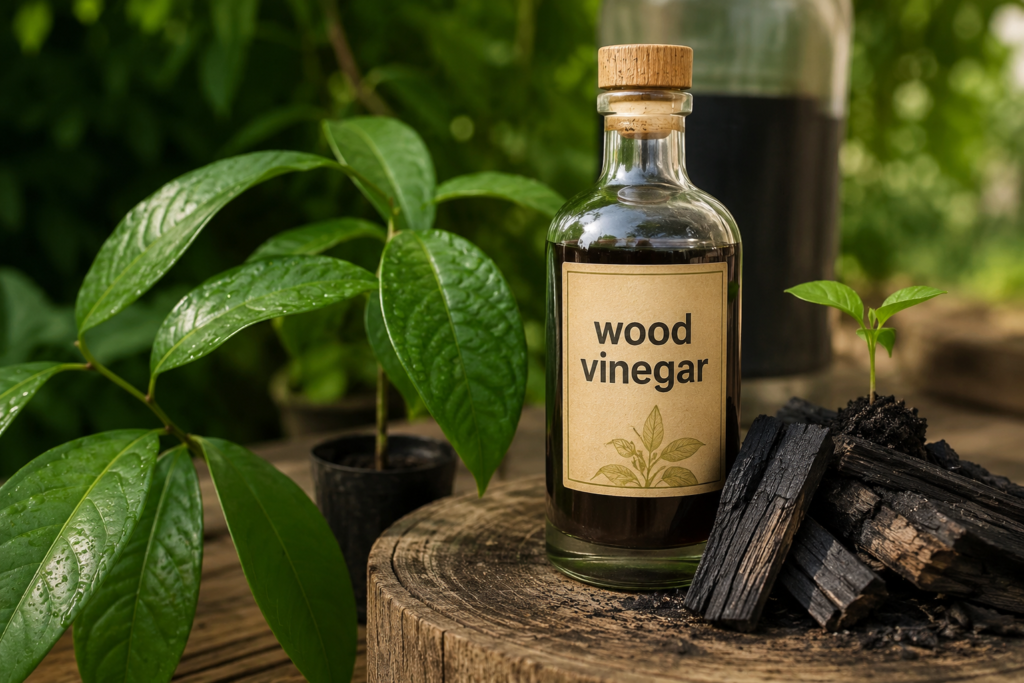
Biostimulant that supports Sustainable Agriculture
Recent years have witnessed a significant increase in interest in wood vinegar as a promising bioproduct in the agricultural sector, driven by the global trend towards sustainable agriculture and reduced reliance on traditional chemical inputs. With the escalating environmental problems associated with the intensive use of chemical fertilizers and pesticides, the search for safe and environmentally friendly alternatives has become a pressing necessity for maintaining ecological balance and improving agricultural production efficiency.
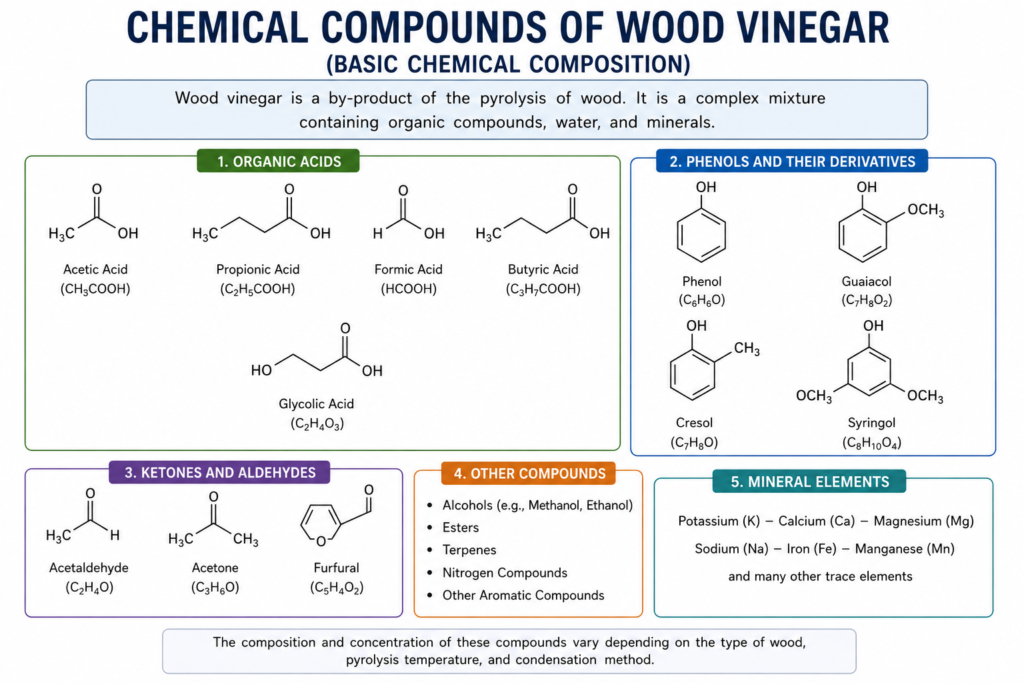
Wood vinegar is produced as a byproduct of the pyrolysis of organic matter under limited oxygen conditions, and is also obtained during the production of biochar or charcoal. It contains a complex mixture of active chemical compounds. Such as organic acids, phenols, alcohols, and esters. That have shown its role in stimulating plant growth and improving the physiological response of plants.
Climate change and increased exposure of plants to environmental stresses, such as drought, salinity, and rising temperatures, have contributed to a growing interest in biomaterials that can support plant resilience and improve its biological efficiency. In this context, أظهرت تطبيقات خل الخشب قدرة ملحوظة على تحسين إنبات البذور، وتنشيط نمو الجذور، وتقليل مظاهر الإجهاد، بالإضافة إلى دوره في تقليل أثير بعض مسببات الأمراض والآفات الزراعية.
Another important factor that brought wood vinegar back into the spotlight was its association withconcepts of circular economy and recycling of agricultural waste. Instead of disposing of waste by direct burning and the resulting environmental pollution, it can be converted into value-added products such as wood vinegar and biochar, thus achieving both economic and environmental benefits.
Furthermore, advancements in chemical analysis techniques and modern physiological studies have helped in understanding the mechanism of action of wood vinegar, which has strengthened its position as a potential biostimulant within programs. Organic farming and climate-smart agriculture. .
In light of this, the renewed interest in wood vinegar can be seen as a reflection of recent changes in global agricultural thinking, which is increasingly moving towards sustainable bio-solutions that combine improving agricultural production, preserving the environment, and reducing the loss of natural resources.
To see the effect of wood vinegar on frost stress in lemon trees…

 English
  Arabic